
When a tooth is lost, the bone that once supported it begins to deteriorate, a process that can silently compromise your eligibility to receive dental implants months or even years down the road. Fortunately, bone grafting offers a reliable path forward, restoring the foundation your jaw needs to support a lasting implant and helping you reclaim a full and functional smile.
At Goodove Oral Surgery & Dental Implants in Virginia Beach, we specialize in the full spectrum of oral surgical care, including bone grafting procedures that prepare patients for successful dental implants. As a locally rooted, independent practice serving the Hampton Roads community since 2008, we provide personalized treatment plans guided by decades of surgical expertise, all within a warm and attentive environment. Our oral surgery procedures are designed to meet you where you are and bring you toward the outcome you deserve.
Bone grafting is a surgical procedure that rebuilds or supplements the jawbone in areas where density or volume has been lost. When teeth are extracted or lost due to injury, decay, or periodontal disease, the surrounding bone no longer receives the stimulation it needs to maintain its structure.
Over time, this leads to resorption, which is the gradual shrinking of the bone. Without sufficient bone volume, dental implants cannot be securely placed. Bone grafting addresses this directly by introducing new bone material to the impacted area, stimulating natural regeneration, and creating the stable foundation an implant needs.
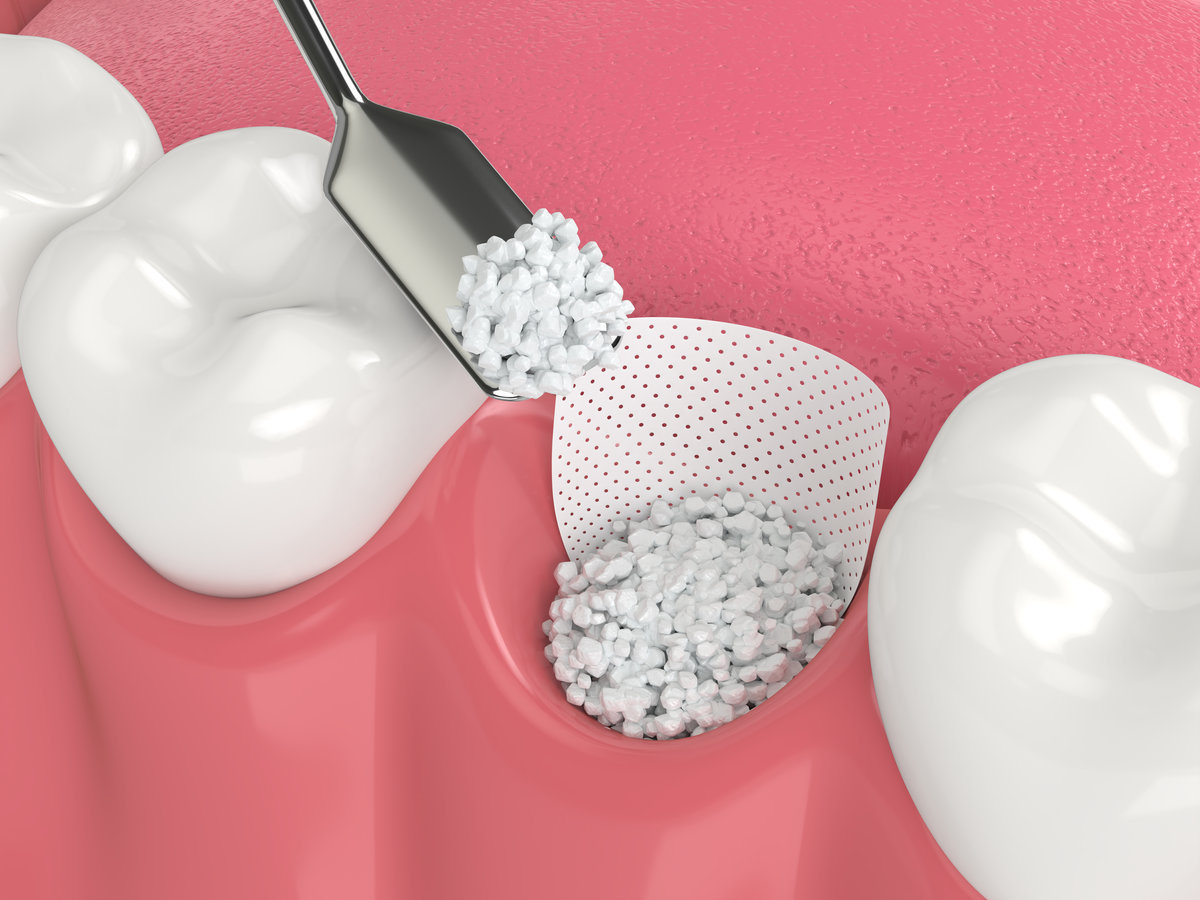
Bone graft material comes from several sources, and the choice depends on your clinical needs, the extent of bone loss, and your overall health:
Autograft — Bone harvested from your own body, typically from the chin, jaw ramus, hip, or tibia. Autogenous bone is considered the gold standard because it contains living bone cells and growth factors that accelerate integration. Best suited for large-volume grafts where maximum predictability is needed.
Allograft — Donated human bone from a certified tissue bank, processed and sterilized for patient safety. This eliminates the need for a second harvest site while still providing excellent structural scaffold material. Widely used for socket preservation and moderate ridge augmentation.
Xenograft — Animal-derived bone (most commonly bovine) that has been processed to remove all organic material, leaving a porous mineralized scaffold. Excellent long-term integration results with a well-established clinical track record.
Synthetic Alloplasts — Biocompatible materials such as hydroxyapatite or beta-tricalcium phosphate that mimic the mineral composition of natural bone. Predictable performance with no risk of disease transmission.
Our surgeons will select the most appropriate graft material and combination based on your three-dimensional imaging, the specific procedure required, and your individual healing factors. We discuss all options with you before treatment begins.
There are several situations in which bone grafting is typically recommended before implant placement. Your oral surgeon will evaluate your jawbone using a thorough clinical exam and advanced imaging. Here is a look at the most common scenarios:
Each of these situations calls for a customized approach, which is exactly why our team takes the time to thoroughly evaluate your bone structure before recommending a course of treatment.
Accurate assessment is critical to planning a bone graft that delivers the right results. At Goodove Oral Surgery, we use cone beam CT imaging to produce detailed three-dimensional images of your jawbone, sinuses, and surrounding anatomy. This technology allows us to measure bone dimensions precisely, identify areas of concern, and map out a surgical plan with a high degree of accuracy before a single incision is made.
At Goodove Oral Surgery, we offer a full range of bone grafting procedures to address different locations and degrees of bone loss:
Socket Preservation Grafts — Performed at the time of tooth extraction, this procedure fills the empty socket with graft material and places a collagen membrane over the site to maintain the bone dimensions. Without socket preservation, up to 50% of socket width can be lost within the first year after extraction. This is the single most effective way to protect your implant options from the moment a tooth is removed.
Ridge Augmentation — When significant bone loss has already occurred, ridge augmentation rebuilds the height and width of the alveolar ridge (the portion of the jaw that once held your teeth). This may involve a combination of graft material and guided bone regeneration (GBR) membranes that protect the graft site while new bone forms. The goal is to restore the ridge dimensions needed to support an implant of optimal size and position.
Sinus Lift (Sinus Augmentation) — When upper back teeth are missing for an extended period, the sinus cavity can expand downward, reducing the vertical bone height available for implant placement. A sinus lift elevates the sinus membrane and places graft material in the space created, adding bone height so implants of adequate length can be placed safely. Available as both lateral window (for larger volume needs) and crestal (transcrestal) approaches depending on the anatomy.
Block Bone Grafts — For cases with substantial bone deficiency in a localized area, a block of bone is harvested from the chin or jaw and stabilized with titanium screws at the recipient site. This technique is used when the volume of bone needed exceeds what particulate graft materials alone can predictably rebuild.
The bone grafting process is very straightforward, and most patients are surprised by how manageable both the procedure and recovery are when they are in experienced hands. The treatment is performed in our Virginia Beach office under appropriate anesthesia or sedation, ensuring you stay comfortable. Once the graft material is placed and the site is closed, the healing phase begins. During this time, the graft integrates with your existing bone in a process called osseointegration, gradually becoming part of your natural jaw structure.
Healing timelines vary depending on the size and location of the graft. Minor socket preservation grafts may require only a few months before an implant can be placed, while more extensive procedures, such as sinus lifts or large block grafts, may require four to nine months of integration time. Our team will monitor your progress with follow-up imaging and guide you through each milestone toward implant placement.
Bone grafting provides the structural foundation that makes long-term dental implant success possible. Without adequate bone, implants cannot be placed at the correct depth, angle, or dimension — and even if placed, they may fail to integrate. Grafting done before implant placement produces significantly better long-term outcomes than attempting to place an implant in compromised bone.
Beyond implant support, bone grafting also preserves facial contours. When the jawbone resorbs after tooth loss, the face begins to develop a sunken, prematurely aged appearance — particularly in the lower third. Rebuilding the bone prevents this from progressing and supports healthy facial structure for years to come.
Bone grafting also supports the health of remaining teeth. When a gap is left unfilled and bone deteriorates, adjacent teeth can shift and become unstable. Proactive grafting at the time of extraction is one of the most clinically efficient investments a patient can make in their long-term oral health.
Choosing an oral surgeon for bone grafting is a critical decision, and the expertise behind your care matters greatly for the long-term success of your implants. Dr. Scott R. Goodove founded this practice with a clear mission: to provide the same level of care he would want for his own family, right in the community he has called home his entire life. Dr. Goodove completed four years of dental school at Virginia Commonwealth University, followed by a four-year hospital-based oral surgery residency, giving him the surgical depth to handle complex reconstructive cases with confidence.
Our practice has remained proudly independent and community-focused. Because we are locally owned and operated, our doctors have the flexibility to make decisions based on what is best for each patient and family. This allows us to provide a more personalized experience, with direct access to your surgeon, continuity of care, and a team that is committed to building lasting relationships within the community we serve. We also hold operating privileges at Virginia Beach Ambulatory Surgery Center and Bon Secours Maryview Medical Center for patients who have more complex cases.
Insurance coverage for bone grafting depends on your specific plan and the clinical reason for the procedure. Socket preservation grafts performed at the time of an extraction are sometimes covered under dental plans that include surgical benefits. More complex augmentation procedures may be partially covered or may require a pre-authorization. In cases involving medical necessity — such as bone loss from trauma, pathology, or systemic disease — medical insurance may contribute to coverage as well.
Our team verifies your dental and medical benefits before treatment and helps identify every reimbursement path available for your specific case. We also offer CareCredit and Cherry Financing options for patients who prefer to spread the cost of treatment over time. Learn more about our accepted insurance plans and financing.
If you have been told that you may need a bone graft before dental implants, or if you are simply exploring your options after tooth loss, the best next step is a consultation with a qualified oral surgeon who can evaluate your specific situation. Our blog post on who needs bone grafting offers an excellent starting point for understanding whether this procedure may be part of your journey.
We welcome patients from across Virginia Beach and the surrounding Hampton Roads region. Our practice accepts a wide range of insurance plans, including major PPO providers, Medicaid, Medicare Advantage, TRICARE, and Veterans Affairs benefits, along with CareCredit and Cherry Financing for those who need flexible payment options. Contact our Virginia Beach office today to schedule your consultation and to learn more about how bone grafting may be the first step for your complete and confident new smile.
Complete healing and integration typically takes three to six months. During this time, the graft material fuses with your existing bone to create a stable foundation for dental implants. Most patients return to normal activities within a few days after the procedure, though complete bone remodeling continues for several months. The exact timeline depends on the extent of grafting and your individual healing response. We monitor progress through regular follow-up appointments before proceeding with implant placement.
Bone graft material comes from several sources. Autografts use your own bone from another area of your jaw or body. Allografts use donated human bone processed for safety. Xenografts are animal-derived bone, usually from cows, specially treated for use. Synthetic materials made from calcium compounds offer an artificial option. Our surgeons determine the most appropriate type based on your specific needs, extent of bone loss, and preferences. All options stimulate your body’s natural bone regeneration process.
Bone grafting is typically performed under local anesthesia with sedation available. During the procedure, you won’t feel pain due to anesthesia. After surgery, mild to moderate discomfort is normal and manageable with prescribed or over-the-counter pain medication. Most patients report the pain decreases significantly within a few days. Swelling and minor bruising are common but resolve within one week. We provide detailed post-operative instructions and pain management guidance.
Socket preservation is a bone graft performed immediately after tooth extraction to maintain the socket’s dimensions and prevent bone loss. When a tooth is removed, surrounding bone begins deteriorating without root stimulation. Socket preservation places bone graft material into the empty socket right away, stopping this deterioration. This maintains bone structure needed for future dental implants and reduces the need for more extensive grafting later. It’s especially recommended when you plan to replace the tooth with an implant.
A sinus lift addresses bone loss in the upper back jaw area near the sinuses. When you lose upper back teeth, the sinus cavity often expands downward while jawbone deteriorates, leaving insufficient bone height for dental implants. During a sinus lift, your oral surgeon gently elevates the sinus membrane and places bone graft material beneath it. This increases bone height and creates adequate space for stable implant placement. Healing typically takes four to six months before implants can be placed.
Some patients have adequate bone volume for immediate implant placement without grafting, but many require it first. The need depends on how long teeth have been missing, whether bone loss occurred due to gum disease or infection, and your individual bone density. We use cone beam CT imaging to assess bone volume precisely. Acting quickly after tooth loss—ideally with socket preservation at extraction time—maximizes chances of avoiding extensive grafting later.
Bone grafting has high success rates when performed by experienced oral surgeons and when patients follow post-operative instructions carefully. Success depends on your overall health, smoking status (smoking significantly reduces success), oral hygiene, and the type and extent of grafting needed. Our surgeons use advanced imaging and proven techniques to optimize outcomes. We monitor healing closely and address any concerns promptly.
Avoid disturbing the surgical area for the first few weeks. Don’t rinse vigorously, spit forcefully, or use straws for at least 72 hours. Skip strenuous exercise and heavy lifting for one week. Don’t smoke, as tobacco dramatically reduces healing and graft success. Avoid hard, crunchy, or sticky foods for several weeks. Don’t touch the surgical area with your tongue or fingers. Follow all prescribed medication schedules and attend follow-up appointments.