
When something changes in your mouth and you can’t explain it — a sore that won’t heal, a white patch that appeared without cause, a lump you’ve been watching for weeks — the uncertainty can be more unsettling than the symptom itself. Chesapeake patients who receive a referral from their general dentist or who self-refer after noticing something unusual deserve a practice that approaches their concern with thoroughness, not alarm and not dismissal. Getting a clear answer from a qualified oral surgeon is the step that resolves uncertainty.
At Goodove Oral Surgery & Dental Implants in Chesapeake, our oral pathology evaluations are led by Dr. Peter Zagursky, a board-certified oral and maxillofacial surgeon whose hospital-based surgical training included extensive work with head and neck anatomy and tissue diagnosis. We are an independent practice, which means our doctors make clinical decisions based entirely on what is right for you — no referral minimums, no volume pressures, no corporate filter between you and the information you need. We are a trusted part of the Chesapeake and Hampton Roads dental referral network, and we take every evaluation seriously, regardless of how routine it may appear.
Oral pathology is the branch of dentistry focused entirely on identifying and managing diseases of the mouth, jaw, and surrounding structures. This includes conditions that affect the soft tissues of the mouth, such as the gums, tongue, lips, cheeks, and the floor and roof of the mouth, as well as deeper structures like the jawbone and salivary glands.
Many oral conditions are benign and treatable, but others require prompt attention to prevent progression. Oral surgeons are uniquely positioned to evaluate these conditions because of their advanced surgical training, understanding of the anatomical structures involved, and ability to perform biopsies and other diagnostic procedures in a clinical setting.
Not every change in your mouth is cause for alarm, but certain signs should always be evaluated by a specialist. Any abnormality that persists for more than two weeks without a clear cause calls for a professional examination. The following are the types of changes we frequently assess:
These are not exhaustive of every condition we evaluate, but they represent the most common reasons patients seek an oral pathology consultation.
The earlier an oral abnormality is identified, the more treatment options are available and the better the outcome tends to be. This is especially true for conditions that can progress if left untreated. Routine dental visits provide an important first line of screening, and general dentists frequently refer patients to our office when they spot something that requires closer examination. Early intervention often means a much simpler process for resolving any issues that are found.
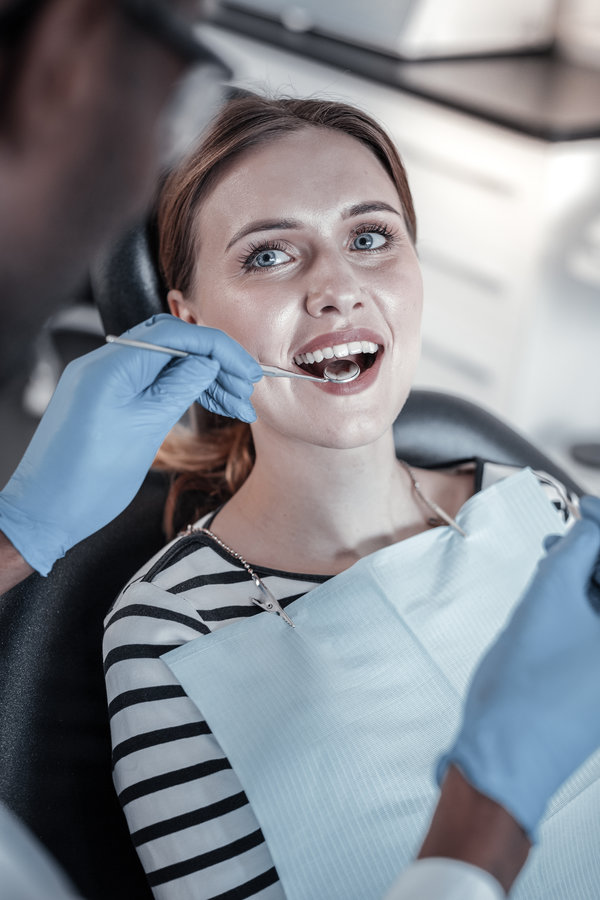
When something unusual appears in or around your mouth, a structured evaluation is the first step toward understanding what it is and how to address it. Our process is thorough, unhurried, and designed to give you clear answers.
When you come in for an oral pathology evaluation at our Chesapeake office, we begin with a thorough clinical examination of the mouth and jaw. Dr. Peter Zagursky will review your medical and dental history, examine the area of concern, and discuss what he observes. Depending on the findings, additional imaging such as cone-beam CT imaging may be recommended to get a three-dimensional view of underlying structures, particularly when a bony lesion or mass is involved.
If the clinical examination reveals an area that cannot be definitively diagnosed by appearance alone, a biopsy may be recommended. A biopsy is a minor surgical procedure in which a small sample of tissue is removed and sent to a pathology lab for analysis. The results provide a definitive diagnosis and guide all subsequent treatment decisions. Our team performs biopsies with care and precision, and we discuss every aspect of the procedure with you beforehand so you know exactly what to expect.
Oral surgeons complete four to six years of hospital-based surgical residency training beyond dental school, which includes extensive experience with head and neck anatomy, tissue diagnosis, and surgical technique. This depth of training makes oral surgeons especially capable of evaluating complex or unusual findings in the mouth and jaw.
At Goodove Oral Surgery & Dental Implants, we also hold operating privileges at Bon Secours Maryview Medical Center, which means that patients with more complex medical needs can receive care in a hospital setting when appropriate. This level of access is not available at every practice and reflects the scope of care we can provide.
As a trusted, independent practice serving Chesapeake, Virginia Beach, and the broader Hampton Roads region, our doctors have the experience and commitment that patients have come to rely on. Because we are locally owned and operated, our doctors have the flexibility to make decisions based on what is best for each patient and family, and to build lasting relationships within the community we serve.

Dr. Zagursky approaches oral pathology evaluations with the systematic, detail-oriented mindset that his background in military medicine cultivated. He understands the difference between a finding that requires urgent action and one that calls for careful monitoring, and he communicates that clearly to every patient and to the referring provider. When something in your mouth doesn’t feel right, our Chesapeake team provides answers — not anxiety — and a clear path forward for whatever comes next.
If you have noticed any unusual changes in your mouth or have received a referral from your general dentist, we encourage you to reach out. Contact our Chesapeake office to schedule your consultation. Referring providers in the Hampton Roads area are welcome to contact us directly to coordinate patient care.
Our patients tend to have the follwoing questions about oral pathology:
Most consultations at our Chesapeake office take about an hour. This includes a review of your medical and dental history, a thorough clinical examination of the mouth and jaw, and a discussion of your doctor’s findings. If imaging or a biopsy is recommended, additional time will be scheduled for those steps. We never rush through a pathology evaluation, because getting the full picture is essential to making the right recommendation.
Biopsies are typically performed under local anesthesia, so you should not feel pain during the procedure itself. You may experience mild soreness or tenderness at the site for a day or two afterward, which is usually manageable with over-the-counter pain relief. Our team will walk you through what to expect and provide care instructions specific to your procedure.
Tissue samples are sent to an oral pathology laboratory for analysis. Results typically return within one to two weeks, depending on the lab. We will contact you as soon as we receive your results and discuss the findings with you in detail, along with any next steps that may be needed.
General dentists play an important role in detecting early signs of abnormalities during routine exams and are often the ones who initiate a referral. However, evaluating and managing oral pathology findings typically requires the advanced diagnostic tools, surgical training, and anatomical expertise of an oral and maxillofacial surgeon. Complex or suspicious lesions require a higher level of assessment than a general practice can provide.
There are many possible causes, ranging from minor irritation or infection to more serious conditions that require treatment. Trauma, nutritional deficiencies, fungal infections, and tobacco use are among the more common causes. Some lesions, however, can indicate precancerous or cancerous changes that must be identified early. This is why any white or red patch that persists for more than two weeks without a clear cause should be evaluated by a specialist rather than monitored at home.
A referral is not required to schedule an oral pathology evaluation at our Chesapeake office, though many patients do come to us through their general dentist. If you’ve noticed an unusual change in your mouth that concerns you, you can contact us directly. Referring providers can also access our oral pathology referral information on our website to connect patients with our care.
Office Hours: Monday – Thursday: 9:00 am – 5:00 pm, Friday: 8:00 am – 2:00 pm