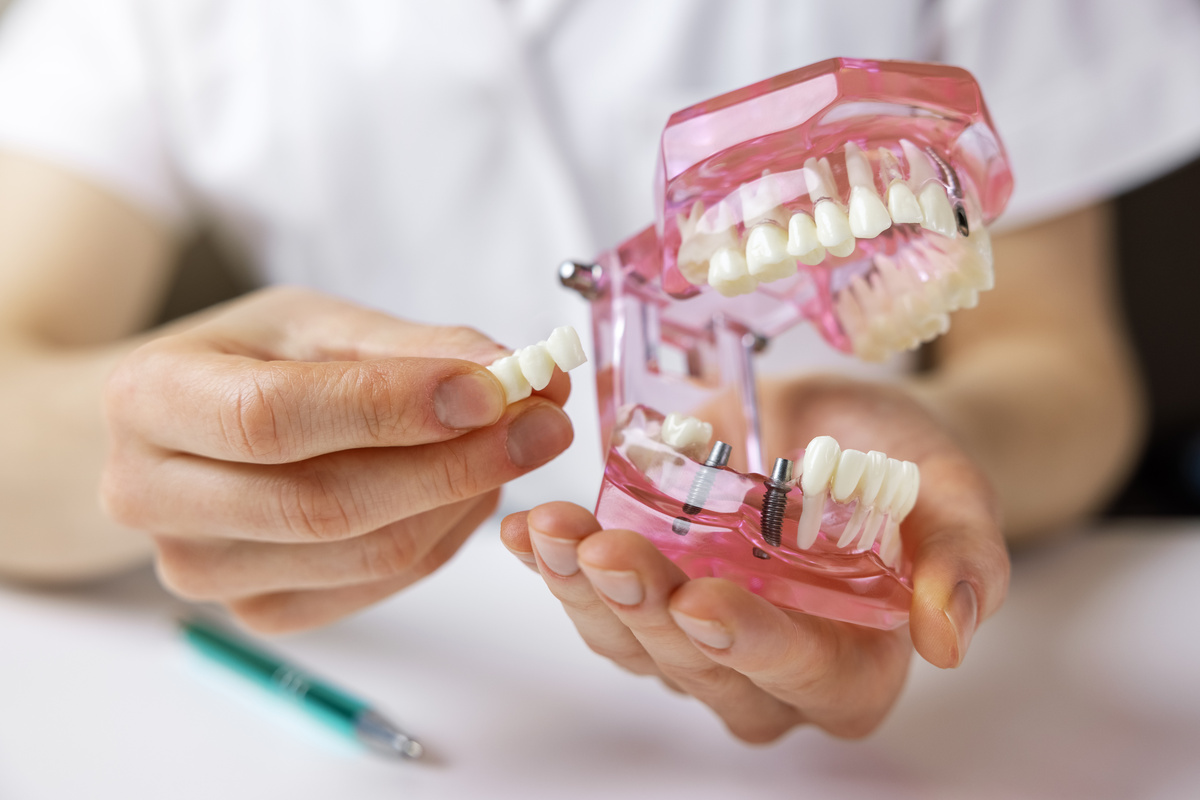
A dental implant is not something you get and then forget about. How you care for it in the months and years after placement directly affects how long it lasts, how comfortable it feels, and whether the surrounding bone and gum tissue stay healthy. Patients who understand what long-term implant care actually requires tend to avoid the complications that shorten an implant’s lifespan, while patients who treat it exactly like a natural tooth sometimes run into problems they did not expect.
At Goodove Oral Surgery, we walk every implant patient through a maintenance routine built around their specific restoration, whether that is a single tooth, an implant-supported bridge, or a full arch replacement. Our dental implants team believes the placement procedure is only half the story. The habits you build afterward determine whether that investment holds up for decades or needs revision sooner than it should.
Daily Habits That Protect Your Implant
Implants do not get cavities, but the gum and bone tissue supporting them can still develop disease if plaque is allowed to build up around the implant crown. This condition, known as peri-implant disease, is the leading cause of implant failure after the healing period is complete. Brushing twice a day with a soft-bristled or electric brush, and cleaning between the implant and neighboring teeth daily, keeps that bacterial buildup from taking hold.
Standard floss can be difficult to maneuver around an implant crown or abutment, so we often recommend interdental brushes, water flossers, or implant-specific floss designed to wrap around the restoration without shredding. If you have an implant-supported bridge or an overdenture, cleaning underneath the restoration matters just as much as cleaning around it, as food and plaque can collect in spaces a toothbrush alone cannot reach.
Why Professional Checkups Still Matter
Even with excellent home care, implants need to be evaluated by a professional on a regular schedule. During these visits, we check the stability of the implant, examine the surrounding gum tissue for early signs of inflammation, and take periodic X-rays to confirm the bone level around the implant has not changed. Catching a problem early, before it progresses to bone loss, is almost always easier to manage than waiting until symptoms appear.
What a Maintenance Visit Involves
A hygienist trained in implant maintenance uses instruments designed specifically for implant surfaces, as standard metal scalers can scratch the implant and create rough spots where bacteria collect more easily.
Recent research published in a peri-implant care review found that a multimodal home-care routine — combining a powered or oscillating-rotating toothbrush with interdental aids such as water flossers or interproximal brushes — controlled plaque and inflammation around implants more effectively than any single method used alone, which is part of why ongoing self-care combined with professional monitoring is considered the standard for long-term implant health.
Signs You Should Not Ignore
Bleeding when you brush around the implant, persistent bad breath localized to one area, or a feeling of looseness in the restoration are all signals that something needs attention sooner rather than later. Waiting to see if these symptoms resolve on their own is one of the more common reasons implant problems become harder to treat by the time a patient calls.
Lifestyle Factors That Influence Implant Longevity
Smoking is one of the most significant risk factors for implant complications because it restricts blood flow to the gum tissue and slows healing, which makes the tissue around the implant more vulnerable to infection over time. Patients who smoke are encouraged to talk with our team about cessation support, because even reducing frequency can significantly improve outcomes.
Grinding or clenching places repeated stress on an implant that natural teeth are better equipped to absorb through their ligament attachment. A few other everyday factors are worth keeping in mind as part of a long-term care routine, including:
- Chewing ice, pens, or other hard non-food objects can chip an implant crown the same way it can crack a natural tooth
- Managing conditions like diabetes closely supports healing and reduces infection risk around the implant site
- Wearing a mouthguard during contact sports protects the implant from a direct impact that could damage the restoration
None of these factors guarantee a problem will occur, but each one adds a measure of protection when combined with the daily hygiene and professional care described above.
Frequently Asked Questions About Long-Term Dental Implant Care
How often should I have my dental implant checked by a professional?
Even with excellent home care, implants should be evaluated on a regular schedule set by your dental team. These visits let us check implant stability, look for early signs of gum inflammation, and take periodic X-rays to confirm the bone level around the implant has not changed, so a problem can be caught and addressed before it progresses.
What is the best way to clean around a dental implant at home?
Standard floss can be hard to work around an implant crown or abutment, so we typically recommend a combination approach, such as an electric or oscillating-rotating toothbrush along with interdental brushes or a water flosser, to reach the areas a toothbrush alone cannot clean. Using more than one cleaning method together tends to control plaque more effectively than relying on just one.
What are the warning signs that something might be wrong with my implant?
Bleeding when you brush around the implant, persistent bad breath localized to one spot, or a feeling of looseness in the restoration are all signs worth having evaluated promptly. Catching these symptoms early is one of the biggest factors in how easily a problem can be treated.
Does smoking really affect how long a dental implant lasts?
Yes. Smoking restricts blood flow to the gum tissue and slows healing, which leaves the tissue around an implant more vulnerable to infection over time. Patients who are able to cut back or quit smoking tend to see better long-term outcomes with their implants.
Can grinding or clenching my teeth damage my implant?
It can. Unlike a natural tooth, an implant does not have a ligament to help absorb the repeated stress of grinding or clenching, so that force is transferred more directly to the implant and surrounding bone. If you grind your teeth, ask our team about a nightguard or other protective option to reduce that stress.
Partner With Goodove Oral Surgery and Dental Implants for the Long Term
Long-term implant success comes down to a partnership between what you do every day at home and the care you receive from our team at Goodove Oral Surgery and Dental Implants. Our doctors and staff monitor healing and stability well beyond the initial procedure, and we build a maintenance schedule around your specific restoration rather than applying a one-size-fits-all approach to every patient. Because we are locally owned and operated, our doctors have the flexibility to make decisions based on what is best for each patient and family.
If you have questions about caring for an existing implant or want to understand what maintenance would look like before moving forward with treatment, our team of doctors is ready to walk you through it. You can also read patient experiences on our reviews page. Reach out to us to schedule a consultation and start building a care plan that keeps your implant healthy for years to come.