
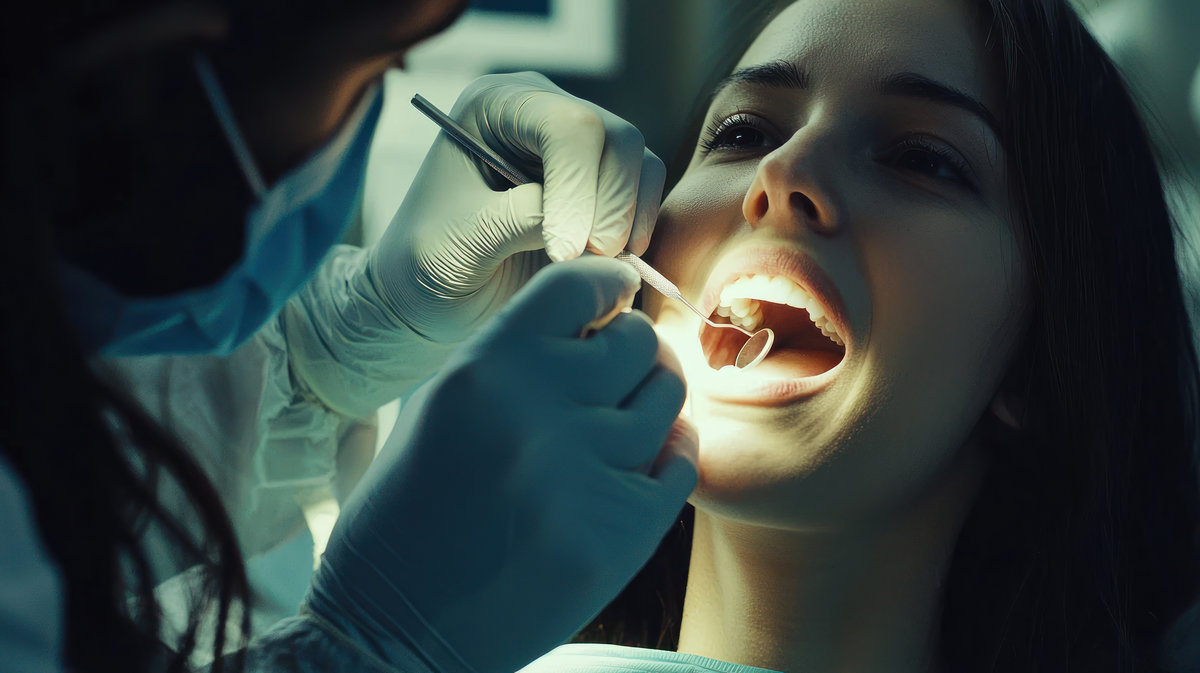
A sore that lingers longer than it should, a rough patch on the tongue that never quite smooths out, a spot of numbness that has no obvious cause. These are easy signs to brush off, especially when they show up in a mouth that otherwise feels fine. Most of the time, they are nothing serious. But some of the time, they are the earliest clue that something needs a closer look, and catching that clue early can change everything about how treatment goes.
At Goodove Oral Surgery & Dental Implants, oral pathology is one of the services we provide for patients across Virginia Beach and Chesapeake, and it covers exactly this kind of concern. Our doctors, Dr. Scott Goodove, Dr. Peter Zagursky, and Dr. Sam Fowler, are trained to tell the difference between something minor and something that needs a biopsy, and referring dentists throughout Hampton Roads count on that distinction when a patient’s exam turns up something unusual.
Why Early Detection Matters So Much
Oral cancer symptoms are often mistaken for a toothache, a canker sore, or a cold, which is part of why they get overlooked. According to the American Association of Oral and Maxillofacial Surgeons, when oral cancers are found at an early stage, the survival rate ranges from 80 to 90 percent. That is a wide gap compared to cancers caught later, and it is the reason we encourage patients not to wait out a symptom that has stuck around for more than two or three weeks.
Part of the challenge is that the mouth heals quickly under normal circumstances. A bitten cheek or a canker sore from a rough edge on a tooth tends to clear up within a week or so. When a sore, patch, or lump does not follow that pattern and instead persists, that timeline itself is a signal worth paying attention to.
Common Early Warning Signs
The signs of oral cancer can appear almost anywhere in the mouth or throat, and they tend to be subtle before they become obvious. A patient might notice one symptom on its own, or several at the same time, and neither pattern is more or less worth mentioning to a doctor.
The following symptoms are worth watching for, particularly if they last longer than two weeks:
- A mouth sore or ulcer that does not heal
- A red, white, or mixed red and white patch on the gums, tongue, or inside of the cheek
- A lump or thickening in the cheek, neck, or floor of the mouth
- Numbness or tingling in the mouth or lips with no clear cause
- Difficulty chewing, swallowing, or moving the jaw or tongue
- A persistent sore throat or the sensation of something caught in the throat
- Loose teeth without an obvious dental reason
None of these symptoms automatically points to cancer. Many have far more common and far less serious explanations. What matters is the pattern: symptoms that persist, worsen, or show up alongside one another are the ones that call for an evaluation rather than a wait-and-see approach.
How an Oral Surgeon Evaluates These Symptoms
When a patient comes to us with a persistent sore, patch, or lump, the first step is a thorough visual and physical exam of the mouth, jaw, and neck. We look for texture, color, size, and whether a lesion is tender or fixed to the underlying tissue, all of which help narrow down what we are dealing with before any further testing.
In many cases, the next step is a biopsy, which is a small tissue sample sent to a lab for analysis. This is the only way to know for certain whether a lesion is benign or something that needs treatment. We understand that the word biopsy can sound alarming, but a biopsy result is far more often reassuring than not, and it gives both the patient and the referring dentist a clear answer instead of an open question.
Working With Referring Dentists
Most of the patients we see for a suspicious lesion arrive by way of a referral from their general dentist, who noticed something during a routine exam and wanted a second, more specialized set of eyes on it. That relationship matters to us. A general dentist sees a patient’s mouth over years and is often the first to notice a change, and we try to make the referral process as direct and efficient as possible so patients are not left waiting.
What Happens After a Diagnosis
If a biopsy comes back showing something benign, which it does in most cases, the lesion may still need monitoring or a minor procedure depending on what it is. Some tissue changes, like leukoplakia, are not cancer themselves but can be worth tracking over time.
If a diagnosis is more serious, our role shifts toward coordinating next steps quickly. Patients who are treated at an earlier stage generally face a more straightforward course of treatment, which is part of why we do not encourage patients to sit on a symptom and hope it resolves on its own. Recovery experiences vary, and our biopsy recovery information can give patients a general sense of what to expect after the procedure itself.
Trust Goodove Oral Surgery & Dental Implants With Your Care
A persistent sore, patch, or lump in the mouth deserves a closer look, not a guessing game. Goodove Oral Surgery & Dental Implants has built its oral pathology services around this kind of evaluation, combining an experienced clinical eye with direct access to your surgeon that a locally owned, independent practice can offer. Because we are locally owned and operated, our doctors have the flexibility to make decisions based on what is best for each patient and family.
If you or your dentist has noticed a mouth sore, patch, or lump that has not resolved on its own, we encourage you to reach out. Contact us today to schedule an evaluation at our Virginia Beach or Chesapeake office.