For patients who have lost most or all of their teeth, the idea of restoring a full smile can feel daunting, and the path forward is not always obvious. All-on-4 dental implants have changed what is possible, offering a fixed, permanent-looking solution that supports an entire arch of teeth on just four carefully placed implants.
At Goodove Oral Surgery & Dental Implants, we help patients throughout the Hampton Roads region understand their options and feel confident about every step of their care. As a community-rooted practice with locations in Virginia Beach and Chesapeake, we provide dental implants and full-arch restorations with the personal attention every patient deserves.
What Are All-on-4 Implants?
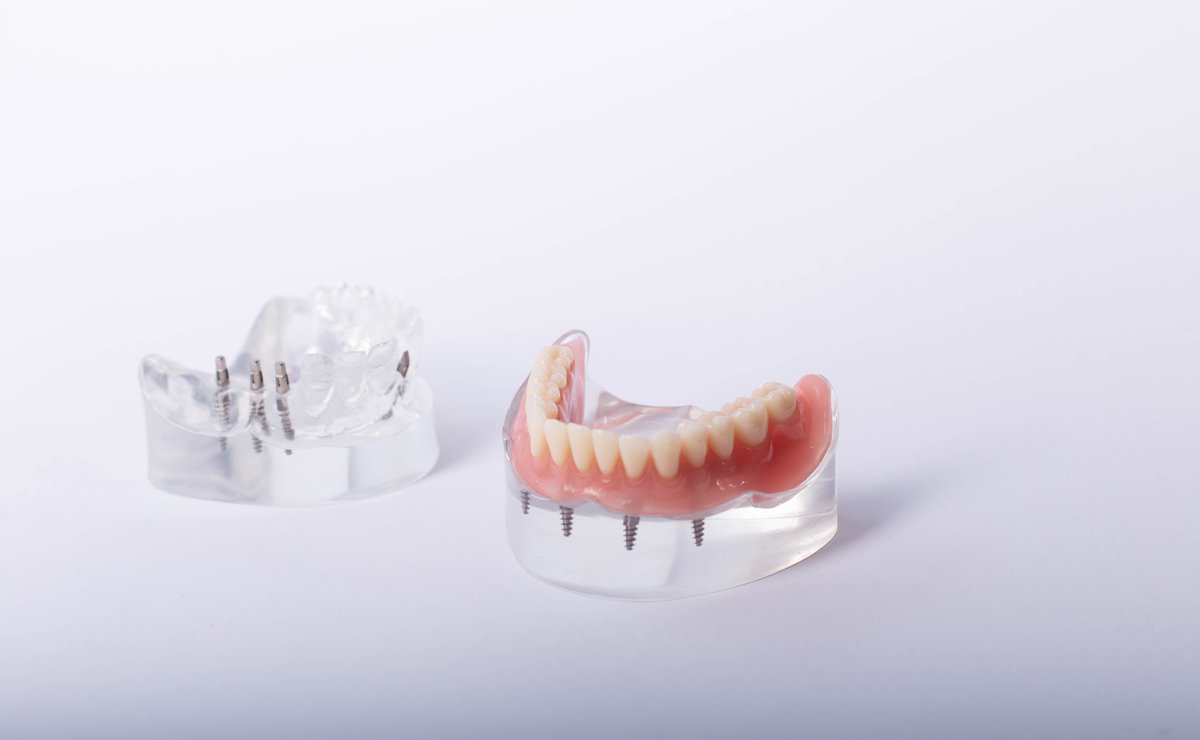
All-on-4 is a full-arch restoration technique that uses four strategically placed implants to support an entire row of replacement teeth. Rather than requiring one implant per missing tooth, this approach distributes bite forces across four anchor points, with two placed vertically at the front of the jaw and two angled toward the back.
The angled rear implants are what make this technique particularly effective. By tilting the posterior implants, we are able to engage more of the available bone, which means many patients can move forward without needing a separate bone grafting procedure beforehand. Research confirms that All-on-4 restorations demonstrate strong long-term implant survival rates and minimal bone resorption over time.
Who Is a Good Candidate?
The ideal candidate for All-on-4 is a patient who is missing all or most of the teeth in one or both arches, or who has teeth that are beyond saving. A thorough evaluation is the first step in determining whether this approach is the right fit for a given patient.
Factors We Evaluate
Several key elements help us determine whether All-on-4 is the appropriate path. None of the following considerations are automatically disqualifying, but each one shapes the treatment plan we build:
- Bone volume: While All-on-4 reduces the need for grafting, adequate bone must still be present to anchor the implants. Patients with more significant bone loss may need bone grafting before or alongside implant placement.
- Overall health: Certain medical conditions and medications can affect healing, so a complete health history is part of every consultation.
- Smoking status: Tobacco use increases the risk of implant failure, and we discuss this openly with every patient who smokes.
- Gum health: Active gum disease must be addressed before implant surgery can proceed safely.
No two patients arrive at the same starting point, which is exactly why we take the time to build a treatment plan that fits each person’s anatomy and goals.
One population we see in particular numbers is Hampton Roads veterans and active duty service members. Virginia Beach and Chesapeake sit at the heart of one of the most densely military-populated metro areas on the East Coast, and many patients dealing with significant tooth loss have service-connected dental conditions. For qualifying veterans, full-arch restoration may be covered under VA dental benefits or the Veterans Affairs Community Care Network. Our team can help you understand what your VA authorization may cover before treatment begins. Dr. Peter Zagursky, a retired Army Colonel, has a firsthand understanding of the challenges veterans face navigating military dental benefits, and he brings that knowledge directly to patient care.
What to Expect During Treatment
Understanding the timeline helps patients feel prepared and removes much of the uncertainty that comes with a major procedure. The All-on-4 process generally unfolds across three distinct phases.
Surgical Day
On the day of surgery, patients receive sedation to stay comfortable throughout the procedure. We place four implants in carefully chosen positions, guided by imaging completed during the evaluation phase. In most cases, a temporary prosthesis is attached that same day, so patients leave with a full smile already in place.
Healing and Final Restoration
The weeks following surgery allow the implants to integrate with the surrounding bone, a process called osseointegration. During this time, we ask patients to follow a soft-food diet and attend follow-up visits so we can monitor healing closely. Once osseointegration is complete, typically several months after surgery, we move forward with the final custom prosthesis, designed to function and feel like natural teeth.
Caring for Your All-on-4 Restoration
All-on-4 implants require consistent care, but the routine is straightforward. Daily brushing, flossing around the implant bridge, and regular professional cleanings form the foundation of long-term success. Patients who stay current with their follow-up appointments tend to see the best outcomes over time, and our team is always available to answer questions between visits.
Caring for a full-arch restoration is not complicated, but it does require commitment. Avoiding hard or sticky foods during the healing period, using a water flosser to clean around the bridge, and scheduling routine maintenance appointments are all habits that protect your investment for years to come.
Schedule Your Consultation at Goodove Oral Surgery & Dental Implants
Choosing to restore a full arch of teeth is one of the most meaningful decisions a patient can make, and it deserves a surgeon who takes that responsibility seriously. Our board-certified oral and maxillofacial surgeons bring advanced surgical training and genuine personal care to every evaluation, and our independent practice means you will always be treated as a patient, not a number.
We welcome patients from across Hampton Roads at our Virginia Beach and Chesapeake locations, and we accept a wide range of insurance plans, including PPO coverage, Medicaid, TRICARE, and Veterans Affairs benefits. If you are ready to find out whether All-on-4 is right for you, contact our office to schedule your consultation today.